






Introduction
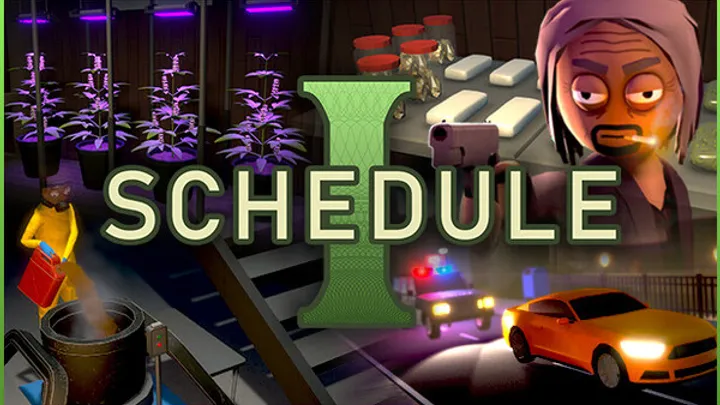
Schedule is a strategic puzzle-management game where players design and optimize daily routines, assign tasks to agents, and balance competing constraints—time, resources, and human factors—to achieve objectives. This "how to" guide teaches you, step by step, how to plan, execute, and refine schedules that reliably meet goals while adapting to dynamic in-game events. The article is organized into ten temporal and meaning-driven sections that mirror a typical match or campaign flow: preparation, time-blocking, resource allocation, agent assignment, contingency planning, real-time adjustments, throughput optimization, long-term planning, failure recovery, and iterative improvement. Each section contains two to three focused paragraphs and includes lists where useful to break down complex processes into actionable steps.

How to prepare before you open the map (objectives, constraints, and baseline metrics)
Begin every scheduling session by clarifying objectives. What are your primary goals for this level or day-cycle? Examples: maximize throughput (number of tasks completed), maximize satisfaction (agent morale), minimize cost (resource usage), or achieve specific milestone tasks (special events). Rank objectives by priority—this will guide trade-offs. Simultaneously list constraints: hard constraints (deadlines, limited agents, locked resources) and soft constraints (preferred agent skills, optional side tasks). Documenting these upfront prevents mid-game decision paralysis.
Establish baseline metrics to measure success. Typical metrics in Schedule include completion rate (tasks per cycle), average task latency (time between task appearance and start), idle time (aggregate agent downtime), and penalty counts (missed deadlines or resource overruns). Run a single simulation or a practice cycle to capture baseline values; these form the reference to evaluate subsequent optimizations. A short pre-run checklist—objectives, constraints, baseline metrics—keeps your plan grounded and measurable.
How to block time effectively (granularity, priorities, and buffers)
Effective time-blocking converts high-level objectives into discrete slots on the schedule grid. Choose an appropriate time granularity: coarse (large blocks) suits strategic planning, while fine-grained (minutes or ticks) enables micro-optimizations. Align granularity with task durations and agent reaction time—too fine, and the schedule becomes noisy; too coarse, and it loses responsiveness.
Prioritize tasks using a multi-factor score (deadline urgency, reward value, resource cost, and agent suitability). Block higher-priority tasks first, then fill remaining slots with lower-priority work. Always include buffers: reserve a small percentage (5–15%) of total time as slack to absorb overruns and unexpected events. Buffers act as shock absorbers and reduce cascade failures when a task runs late.
How to allocate resources and manage inventories (matching supply to demand)
Resource allocation in Schedule requires forecasting demand and ensuring supplies are available where and when tasks require them. Start by mapping task-resource dependencies: which tasks consume what resources and in what quantities. Build a resource flow diagram that tracks inflows (production, resupply), stocks (inventory), and outflows (consumption). This visual model makes bottlenecks visible before they occur.
Implement simple reordering rules to prevent stockouts. For example, a reorder point policy (if inventory falls below threshold X, schedule a resupply operation that arrives in Y time units) works well when lead times are consistent. For variable lead times, use safety stock that scales with demand variance. Track resource usage metrics (turnover rate, stockout frequency) and refine thresholds iteratively.
How to assign agents and balance workloads (skills, affinity, and fatigue)
Agent assignment is a core lever: match agents to tasks where they have the best combination of efficiency and reliability. Maintain an agent profile database that records skills, speed multipliers, failure rates, and special abilities. When assigning, compute an assignment score: base task value × agent efficiency × affinity bonus − estimated fatigue cost. Prefer assignments that maximize aggregate throughput while smoothing individual load.
Fatigue and morale are critical human-factor constraints. Implement workload caps and recovery cycles—e.g., no agent should exceed X active hours without a rest slot. Use rotation patterns to distribute tedious tasks, and give high-morale agents occasional reward assignments to maintain engagement. Monitor indicators like declining success rates or increasing task durations as early signs of fatigue; when detected, re-balance workloads immediately.
How to plan for contingencies (failures, delays, and cascading effects)
Contingency planning prevents single failures from derailing the entire schedule. Identify likely failure modes (task overruns, agent absence, resource delays, emergent high-priority tasks) and design specific responses for each. For example:
- Task overrun: pre-allocated overtime buffer or a "catch-up" slot that can be activated.
- Agent absence: flexible roster of reserve agents with generalized skills.
- Resource delay: alternate supplier routes or temporary task reprioritization.
Create decision trees for common contingencies so responses can be executed quickly. Each decision branch should specify trigger conditions, mitigation actions, and rollback criteria. Practicing these contingencies in simulated runs builds operator muscle memory and uncovers hidden weaknesses in your fallback plans.
How to handle real-time adjustments (monitoring, triggers, and minimal-change updates)
Even the best static schedules require real-time adjustments. Set up a monitoring dashboard that highlights key indicators: tasks lagging behind, agent idle spikes, inventory deviations, and emergent high-value tasks. Automate simple triggers to reduce cognitive load—e.g., when idle time exceeds threshold, the system suggests candidate tasks to fill gaps; when a deadline is about to be missed, trigger a high-priority alert.
When adjusting schedules in real time, prefer minimal-change updates. Large-scale reassignments cause churn and reduce efficiency due to context-switching costs. Use localized edits: re-route one agent, shift a single low-priority task, or activate a small buffer slot. Maintain a short change log to track what adjustments were made and why—this feeds future post-run analysis.
How to optimize throughput (eliminate bottlenecks, parallelize tasks, and exploit synergies)
Throughput optimization aims to maximize the rate of task completions. Identify bottlenecks via the resource flow diagram and monitoring data—high queue lengths at specific stations indicate constraints. Apply classic throughput techniques:
- Bottleneck smoothing: shift upstream work pacing to avoid overwhelming bottleneck stations.
- Parallelization: where tasks are independent, spawn parallel execution by assigning multiple agents or splitting tasks into subtasks.
- Batch processing: for similar tiny tasks, process them in grouped batches to reduce per-task overhead.
Exploit synergies by co-locating dependent tasks or assigning complementary skills to adjacent agents. For example, pair a fast operator (speed) with a careful inspector (accuracy) where throughput and quality both matter. Periodically run targeted experiments (A/B testing) with small changes—different batching sizes or agent pairings—and measure impact on throughput.
How to scale schedules over longer horizons (weekly cycles, compounding workflows, and growth)
Scaling requires moving from single-day optimization to multi-day or multi-week horizons. Use rolling schedules where only the near-term (e.g., next 24–48 hours) is fixed, and the rest is provisional and re-optimized periodically. This keeps long-term plans flexible while ensuring immediate commitments are reliable.
Manage compounding workflows—tasks whose outputs become inputs for future tasks—by ensuring downstream capacity is provisioned before upstream acceleration. Use lead-time buffers and cross-functional handoff checkpoints. When planning for growth (more tasks or agents), model scenarios: what happens if task volume increases 10%/25%/50%? Identify which systems (inventory, agents, processing stations) need capacity upgrades under each scenario and schedule upgrades ahead of time to avoid reactive scramble.
How to analyze failures and recover (post-mortem, root-cause, and corrective schedules)
A rigorous post-mortem culture transforms failure into durable improvement. After each problematic cycle, run a structured post-mortem: timeline reconstruction, root-cause analysis (5 Whys or fishbone diagrams), and identification of corrective actions. Distinguish between immediate fixes (quick schedule edits) and systemic fixes (policy changes, tooling upgrades).
Translate corrective actions into concrete schedule changes and experiments. For example, if the root cause was inconsistent resource delivery, implement a revised reorder policy and schedule a monitoring window to assess effectiveness. Track corrective actions with owners and deadlines to ensure follow-through. Over months, these iterative improvements compound into a more resilient scheduling system.
How to improve scheduling with tools and automation (algorithms, heuristics, and dashboards)
Leverage tools to augment human planning—automation reduces cognitive load and enforces consistency. Start with simple heuristics encoded in scripts: first-fit assignment, earliest-deadline-first priority, and weighted round-robin for rotations. These heuristics often capture 80% of benefits at low complexity.
Progressively adopt optimization algorithms where appropriate: constraint solvers (ILP/SAT) for tightly constrained batches, greedy algorithms for fast online assignment, and reinforcement learning or genetic algorithms for complex, non-linear objectives. Complement algorithmic automation with dashboards that present decision-relevant information (bottleneck heatmaps, agent performance trends, inventory forecasts). Ensure automation remains transparent—operators must understand why the system suggests a change to trust and override it when needed.
How to iterate and institutionalize learning (experiments, documentation, and standard operating procedures)
Schedule excellence is an ongoing process. Institutionalize learning by running controlled experiments (A/B tests) with clear hypotheses: “Increasing buffer from 5% to 10% will reduce deadline misses by X%.” Record experiment parameters, outcomes, and statistical significance. Successful changes become part of documented SOPs.
Maintain a central repository of lessons learned, SOPs, and scheduling templates. Create short training modules for new planners to accelerate onboarding. Run periodic review cycles (monthly/quarterly) to reassess priorities, adjust master templates, and retire obsolete practices. This organizational learning ensures the scheduling system adapts to evolving demands rather than stagnating.
Conclusion
Mastering Schedule requires a blend of planning rigor, adaptive real-time control, and iterative improvement. Start with clear objectives and baseline metrics, block time with buffers, allocate resources deliberately, and assign agents with fatigue-aware balance. Design contingency trees, favor minimal-change real-time edits, and optimize throughput by eliminating bottlenecks and exploiting synergies. Scale via rolling horizons, analyze failures through structured post-mortems, and augment human planners with transparent automation. Finally, institutionalize learning through experiments and documentation so improvements persist. By following the concrete steps laid out above, you will build schedules that are not only efficient but robust and evolvable—capable of weathering surprises while consistently meeting objectives.