The Past Within: The Ultimate Howto Guide to Master This Hot Game
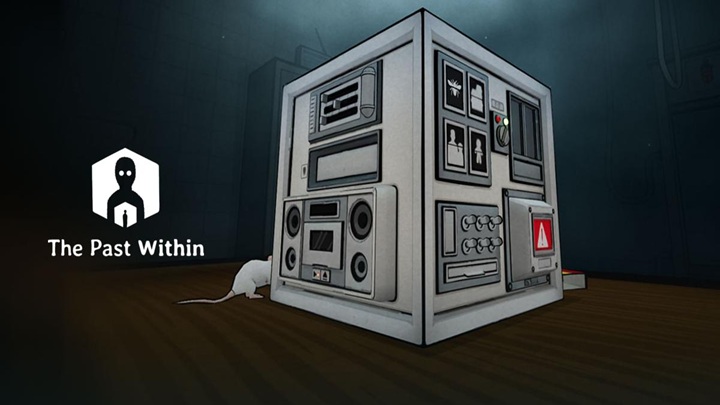
The Past Within is a unique cooperative puzzle adventure that challenges two players to solve mysteries across different timelines. Developed by Rusty Lake, the game combines atmospheric storytelling, strange characters, hidden clues, and carefully designed puzzles. Instead of exploring the same world together, each player experiences a different time period and must communicate with the other person to make progress.
The game is built around cooperation. One player explores the past, while the other investigates the future. Neither player has all the information needed to solve the mystery alone. Every symbol, object, number, sound, and environmental detail may become an important clue for the other player.
This howto guide explains how The Past Within works, how to communicate effectively, how to solve puzzles, and how to avoid common mistakes. If you enjoy mystery games, escape rooms, and story-driven adventures, this hot game offers a memorable experience that rewards patience and teamwork.
1. Understanding The Past Within
The Past Within is a two-player cooperative puzzle game set in the mysterious universe of Rusty Lake. The story focuses on Albert Vanderboom and the strange events surrounding his life, death, and legacy. The game uses two connected timelines: the Past and the Future.
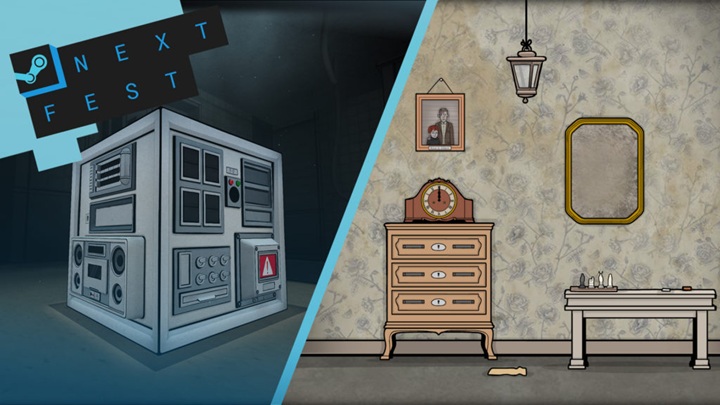
Each player selects one of these timelines. The player in the Past explores an old-fashioned environment filled with objects, machines, portraits, symbols, and hidden mechanisms. The player in the Future investigates a more technological setting where different clues and puzzles appear.
The two players do not share the same view. This design is central to the experience. A clue that looks meaningless to one player may be the exact solution needed by the other. Players must describe what they see and listen carefully to their partner.
Main Features
- Two-player cooperative gameplay
- Past and Future timelines
- Story-driven mystery
- Environmental puzzles
- Symbol-based clues
- Strange and atmospheric locations
- Multiple chapters and puzzle sequences
- Voice communication between players
- A strong focus on observation
The game is not designed for one player to complete everything alone. Its main challenge comes from combining two different perspectives into one solution.
2. Preparing for Your First Playthrough
Before starting The Past Within, make sure both players are ready to communicate. A voice call is strongly recommended because many puzzles require fast and accurate descriptions.
You do not need to be an expert gamer to enjoy the game. The controls are generally simple, and the main challenge is understanding clues rather than performing difficult actions. However, both players should be comfortable examining objects, clicking on interactive areas, and taking notes.
Recommended Preparation
- Play with a friend or trusted partner
- Use voice chat
- Keep paper or a note app nearby
- Agree on clear descriptions
- Avoid looking at the other player’s screen
- Set aside enough time to explore carefully
- Be patient when a clue seems confusing
It is useful to decide how you will describe objects. For example, instead of saying “the symbol on the left,” say “the black triangle above the red circle.” Clear communication can save a lot of time.
Why Communication Matters
The Past Within is not simply a game where two people solve separate puzzles. The actions of one player often affect the progress of the other. A machine in the Past may reveal a code needed in the Future, while a device in the Future may explain how to operate something in the Past.
The better you communicate, the easier it becomes to connect these clues.
3. Choosing the Past or Future Timeline
At the beginning, each player chooses a timeline. One person plays in the Past, and the other plays in the Future. The two experiences are different, but both are equally important.
The Past
The Past has a mysterious, old-fashioned atmosphere. Players may encounter wooden furniture, portraits, mechanical devices, strange rooms, and objects connected to Albert Vanderboom.
The Past often focuses on physical objects and traditional mechanisms. You may need to inspect drawers, rotate parts, identify symbols, or discover hidden combinations.
The Future
The Future presents a more technological environment. Players may encounter screens, electronic devices, futuristic machinery, and unusual interfaces.
The Future often provides a different type of information. A device may display patterns, numbers, or images that help the player in the Past understand an older machine.
Which Timeline Is Better?
Neither timeline is better than the other. The best choice is simply to divide the roles between both players. If you plan to replay the game, switch timelines so each person can experience the other side of the story.
Playing both sides is also useful because it reveals how carefully the developers connect the two perspectives.
4. Learning How Cooperative Puzzles Work
The main puzzle system in The Past Within depends on exchanging information. Each player sees different clues, and the solution usually requires combining both sets of information.
For example, one player may discover a group of symbols while the other finds a machine with matching symbols. The first player must describe the symbols in the correct order, and the second player must enter them into the machine.
Common Puzzle Types
- Symbol matching
- Number codes
- Pattern recognition
- Object arrangements
- Mechanical devices
- Sequence puzzles
- Sound-based clues
- Image comparisons
- Hidden switches
- Timeline connections
The important thing is to avoid assuming that every clue is meant to be solved immediately. Some information may only become useful several minutes later.
A Simple Puzzle-Solving Method
- Explore the entire room.
- Identify every interactive object.
- Describe important items to your partner.
- Write down symbols, numbers, and patterns.
- Compare clues from both timelines.
- Test one possible solution at a time.
- Explain the result to your partner.
- Recheck the original clue if the solution fails.
Do not click randomly. Random actions can make it harder to understand what changed. Instead, interact with objects intentionally and observe the result.
5. Improving Observation and Note-Taking
Observation is one of the most valuable skills in The Past Within. The game often hides useful information in plain sight. A small symbol on a wall, a detail in a painting, or the position of an object may become important later.
Players should pay attention to colors, shapes, directions, numbers, and repeated images. If something looks unusual, describe it to your partner even if you do not yet understand its purpose.
What You Should Write Down
- Numbers
- Letters
- Symbols
- Colors
- Shapes
- Object positions
- Button sequences
- Directions
- Repeated images
- Clues connected to machines
A good note should be specific. Instead of writing “three symbols,” write “circle, triangle, square from left to right.” This makes it easier to communicate the information accurately.
Describing Visual Information
Use consistent language when describing clues. For example:
- “Top left”
- “Bottom right”
- “Facing upward”
- “Three small dots”
- “A black shape inside a white circle”
- “The second symbol from the right”
If both players use vague descriptions, even a simple puzzle can become frustrating. Precise communication is often more important than speed.
6. Solving Mechanical and Symbol Puzzles
Many puzzles in The Past Within involve machines, locks, switches, and strange mechanisms. These objects may look complicated, but they usually follow a logical pattern.
First, inspect the entire device. Look for movable parts, buttons, symbols, and areas that change when you interact with them. Then ask your partner whether they have seen a similar pattern in their timeline.
Symbol Puzzles
Symbol puzzles often require the players to compare shapes. A symbol may appear in one timeline while the matching input device appears in the other.
When solving a symbol puzzle, describe:
- The shape
- The direction
- The number of lines
- The number of dots
- The color
- The order
- The location
Do not assume that two symbols are identical just because they look similar. Small differences may matter.
Sequence Puzzles
Some devices require a particular order. If you find a sequence, write it down before entering it. Entering the wrong sequence may reset the puzzle or make the process more confusing.
If the sequence does not work, check whether:
- You started from the wrong side
- The order should be reversed
- A symbol was described incorrectly
- The device belongs to the other timeline
- Another action must be completed first
Mechanical Devices
Mechanical puzzles often require patience. Try rotating or activating one part at a time and observe how the machine responds. Explain every change to your partner.
A machine may reveal a new symbol, open a compartment, or change its appearance after the correct action. These changes are usually important clues.
7. Building Better Teamwork
The Past Within becomes much easier when both players work as equal partners. One player should not dominate the entire conversation or assume that their clues are more important.
Divide Responsibilities
A useful teamwork system is:
- Player in the Past describes physical objects.
- Player in the Future describes screens and electronic devices.
- Both players record codes and symbols.
- Each player confirms instructions before acting.
- Both players explain what changes after an action.
This method reduces confusion and ensures that both people remain involved.
Repeat Important Information
If your partner gives you a code, repeat it before entering it. For example, say, “I heard triangle, circle, square. Is that correct?” This simple habit prevents mistakes.
You should also explain when you have completed an action. Saying “the door opened” or “the screen changed” helps your partner understand that the clue has been used successfully.
Avoid Solving Too Quickly
Sometimes one player may think they understand the answer immediately. However, acting too quickly can cause the other player to miss important information.
Take time to compare both perspectives. The game is designed around cooperation, so rushing can make the experience less enjoyable.
8. Understanding the Story and Atmosphere
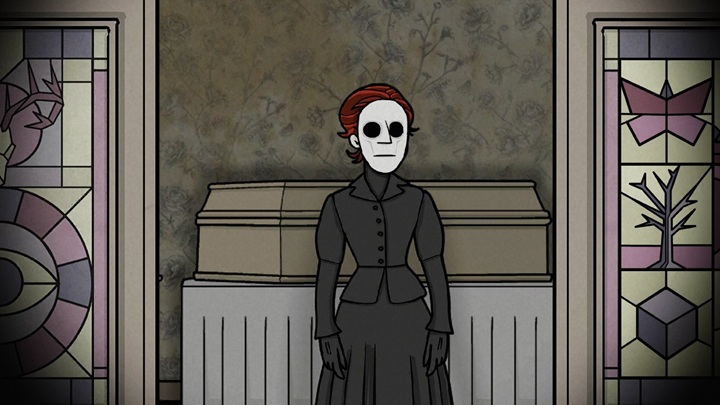
The Past Within is not only a puzzle game. It is also part of the wider Rusty Lake universe, which is known for surreal storytelling, strange characters, dark humor, and mysterious events.
The story surrounding Albert Vanderboom becomes more understandable as players investigate objects and complete puzzles. Many details are presented indirectly rather than through long explanations.
Storytelling Through the Environment
The game uses:
- Paintings
- Objects
- Machines
- Character appearances
- Strange sounds
- Room design
- Repeated symbols
- Unusual interactions
These elements help create an unsettling atmosphere. Even when you are focused on solving a puzzle, pay attention to the world around you. Environmental details may provide story clues or connect the game to other Rusty Lake titles.
Playing Without Spoilers
The Past Within is most enjoyable when both players discover the story together. Avoid searching for complete solutions too early because spoilers can reduce the impact of the game’s mysteries.
If you need help, try asking for a small hint rather than reading an entire walkthrough. A short clue can help you continue while preserving the satisfaction of solving the puzzle yourself.
9. Avoiding Common Mistakes
Many players become stuck in The Past Within because they overlook a small detail or fail to communicate clearly. Most problems can be solved by slowing down and reviewing the environment.
Common Mistakes
- Forgetting to describe an object
- Entering a code without confirming it
- Ignoring small symbols
- Focusing on only one timeline
- Clicking randomly
- Forgetting where a clue was found
- Assuming both players see the same thing
- Missing a newly opened area
- Not checking changes after an action
- Looking up a full solution too quickly
One of the most common mistakes is assuming that a puzzle belongs entirely to one player. If you cannot solve a device, ask your partner to inspect their environment again. The missing information may be on the other side.
Another mistake is failing to revisit an area. After activating a machine, a previously inspected object may change. Always check the room again after completing an important action.
How to Recover When You Are Stuck
If you are stuck, follow this process:
- Stop interacting randomly.
- Review every note.
- Describe all visible objects again.
- Ask your partner what changed.
- Check newly opened areas.
- Compare symbols and patterns.
- Try the solution in reverse order if appropriate.
- Use a small hint only when necessary.
10. Why The Past Within Is a Hot Game
The Past Within remains a hot game for puzzle fans because it offers an experience that is difficult to recreate in ordinary single-player adventures. The two-timeline design makes communication essential, and every puzzle feels more meaningful when solved together.
The game is also attractive because it does not rely on complicated combat or fast reflexes. Instead, it rewards curiosity, observation, logic, and cooperation. This makes it suitable for friends, couples, family members, and anyone who enjoys solving mysteries together.
Reasons to Try The Past Within
- Unique cooperative design
- Different experiences for both players
- Atmospheric mystery
- Creative puzzles
- Strong storytelling
- Simple controls
- Memorable visual style
- Encourages communication
- Great for short gaming sessions
- Fun to replay with swapped roles
The game also encourages discussion after each puzzle. Players naturally share theories, compare discoveries, and try to understand the larger mystery. This social element is one of its greatest strengths.
If you enjoy escape-room experiences, mystery adventures, or games that require teamwork, The Past Within is an excellent choice. Its strange world and clever puzzle structure create a memorable experience from beginning to end.
Conclusion
The Past Within is a cooperative mystery adventure that combines two timelines, atmospheric storytelling, and challenging puzzles. Its unique design requires one player to explore the Past while the other investigates the Future. Neither player has every answer, making communication the key to success.
To improve at the game, observe carefully, take notes, describe clues precisely, and compare information with your partner. Avoid random clicking and do not rush through puzzles. When you become stuck, review the environment and check whether your partner has discovered something important.
The game is more than a collection of puzzles. It is a shared mystery that rewards teamwork, patience, and curiosity. With the right partner and a good communication strategy, The Past Within becomes an engaging and unforgettable hot game experience.