Why Minecraft’s Survival Progression Quietly Became Too Easy
Introduction
Minecraft is often praised as one of the greatest sandbox games ever created. Since its release, millions of players have explored endless procedural worlds, built massive cities, survived dangerous nights, and transformed simple blocks into astonishing creations. The game’s freedom remains almost unmatched in modern gaming.
However, beneath Minecraft’s creativity lies a long-running design issue that many veteran players have slowly noticed over the years: survival progression has become dramatically easier than it once was. This change did not happen suddenly. Instead, it emerged gradually across updates through new mechanics, overpowered systems, safer exploration, optimized strategies, and increasingly generous rewards.
This article does not discuss Minecraft generally. Instead, it focuses deeply on one specific problem: how Minecraft’s survival mode slowly lost much of its tension, danger, and progression challenge. By examining the evolution of food systems, villages, enchantments, resource acquisition, Nether travel, automation, and late-game balance, we can better understand why many long-term players believe modern survival mode feels less rewarding than older versions of the game.
Early Minecraft Survival Was Built Around Vulnerability
In older versions of Minecraft, survival mode felt genuinely dangerous. Players spawned into unknown terrain with almost nothing. Food was scarce, hostile mobs were threatening, caves felt terrifying, and death carried serious consequences because recovering lost items was difficult.
The early game created powerful emotional tension because players lacked security. Even simple tasks like finding coal or building a shelter before nightfall felt meaningful. Darkness itself was intimidating because visibility was poor and mobs could overwhelm inexperienced players quickly.
Why Early Survival Felt Rewarding
The original survival experience worked because progression was tied closely to vulnerability. Players slowly earned safety through preparation and knowledge. Building a small wooden house felt satisfying because it protected against real danger.
Every resource mattered in the early years. Iron tools represented progress. Diamonds felt rare and valuable. Food shortages forced players to think carefully about exploration distances and risk management.
The Original Survival Loop
- Gather resources carefully
- Survive dangerous nights
- Explore caves cautiously
- Protect limited food supplies
- Upgrade equipment slowly
The game’s simplicity amplified tension rather than reducing it.
Hunger Mechanics Eventually Became Too Manageable
When the hunger system was first introduced, it added strategic depth to survival gameplay. Players needed reliable food sources, and exploration became riskier because starvation limited health regeneration.
Over time, however, food gradually stopped being a meaningful survival mechanic. Modern Minecraft allows players to establish nearly infinite food supplies extremely early in progression.
Why Food Lost Its Survival Importance
Once players obtain basic farming tools or animal breeding systems, hunger essentially disappears as a challenge. Massive wheat farms, automatic chicken cookers, villager crop farms, and fishing systems produce enormous food quantities with minimal effort.
Cooked steak and golden carrots became so efficient that players rarely think about survival planning anymore. Food transformed from a survival system into background maintenance.
Why Infinite Food Changes Game Balance
- Exploration becomes less risky
- Health regeneration becomes constant
- Long-distance travel loses tension
- Resource management disappears
- Preparation becomes unnecessary
Once hunger stops mattering, the survival experience becomes significantly softer.
Villages Quietly Broke Progression Balance
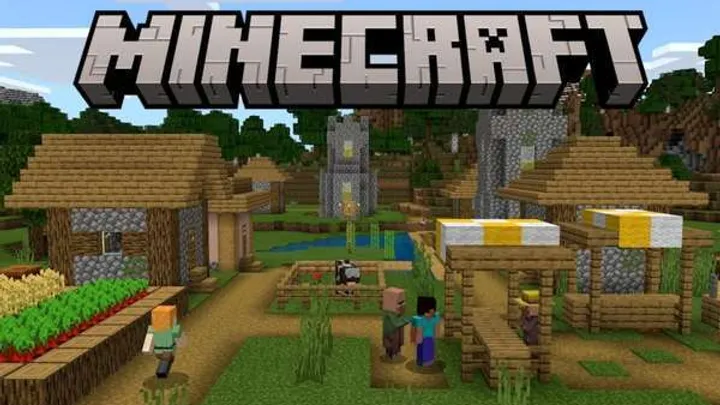
One of the most important moments in Minecraft’s evolution was the expansion of villages and villager trading. What initially seemed like a charming worldbuilding feature eventually transformed into one of the most overpowered systems in the game.
Modern villages allow players to bypass enormous portions of natural progression.
Villager Trading Replaced Exploration
In older Minecraft versions, players explored caves and mines extensively to obtain valuable resources and enchantments. Today, villagers provide easy access to enchanted books, diamond gear, food, tools, and rare items with relatively little danger.
This fundamentally changed player behavior. Instead of exploring dangerous environments, many players immediately focus on building trading halls.
The Trading Hall Meta
- Infinite enchanted books
- Easy diamond equipment
- Renewable emerald farming
- Minimal combat risk
- Highly optimized progression routes
Villagers unintentionally reduced the importance of exploration, mining, and adventure.
Enchantments Became Excessively Powerful
Enchantments originally felt rare and magical. Obtaining strong enchanted gear required substantial effort, luck, and experience collection. Today, enchantments are often easy to acquire and dramatically overpower most survival threats.
Fully enchanted Netherite gear turns players into near-invincible tanks.
The Shift From Survival to Dominance
Protection IV armor, Sharpness V weapons, Mending, Unbreaking, Feather Falling, and Efficiency fundamentally reshape gameplay balance. Once players obtain these enchantments, many survival systems stop functioning as meaningful obstacles.
Hostile mobs become trivial. Environmental hazards lose danger. Resource gathering becomes extremely fast.
The Mending Problem
- Equipment durability became irrelevant
- Players stopped crafting replacement gear
- Resource scarcity weakened dramatically
- Late-game tension disappeared
- Long-term survival became effortless
What once felt like survival eventually became permanent technological dominance.
The Nether Became Safer Than the Overworld
The Nether was originally terrifying. Dangerous terrain, lava oceans, poor visibility, and aggressive mobs created intense pressure. Traveling through the Nether felt like entering hostile territory.
Modern Minecraft gradually reduced much of this fear through better gear, optimized travel systems, and increased player knowledge.
Nether Travel Became Infrastructure
Experienced players now use the Nether primarily as a transportation network. Ice boat highways, coordinated portals, fire resistance potions, and advanced equipment make traversal relatively safe.
Even dangerous structures like Bastions become manageable once players understand predictable strategies.
Knowledge Reduced Fear
Several factors softened the Nether experience:
- Community optimization guides
- Overpowered enchantments
- Reliable potion systems
- Netherite armor strength
- Predictable mob behavior
The dimension still looks dangerous, but experienced players rarely feel true survival pressure there anymore.
Automation Removed Too Much Manual Survival Gameplay
Automation is one of Minecraft’s most beloved mechanics. Redstone engineering allows players to build astonishing machines and technical systems. However, large-scale automation also weakened survival gameplay significantly.
Automatic farms now generate enormous quantities of resources with little ongoing player involvement.
The Rise of Infinite Resource Generation
Modern Minecraft players can automate:
- Food production
- Iron farming
- Mob drops
- Sugar cane harvesting
- Experience farming
- Villager trading systems
- Gold farming
Once these systems exist, survival mechanics lose relevance because scarcity disappears almost entirely.
Creativity Versus Survival
This creates an interesting conflict inside Minecraft’s design philosophy. Automation encourages creativity and engineering, which are core strengths of the game. However, excessive efficiency also removes many survival challenges.
The game slowly shifts away from survival tension and toward industrial optimization.
Death Lost Much of Its Emotional Impact
One hidden consequence of easier progression is that death no longer feels especially meaningful for experienced players. In older Minecraft versions, death could destroy hours of progress because equipment and resources were difficult to replace.
Modern systems make recovery much easier.
Why Death Became Less Threatening
Players now commonly possess:
- Backup enchanted gear
- Villager trading halls
- Massive food reserves
- Experience farms
- Totems of Undying
- Coordinates and recovery tools
As a result, even catastrophic mistakes often become temporary inconveniences rather than major setbacks.
The Emotional Difference Matters
Games become memorable partly because of emotional stakes. When players fear losing progress, victories feel meaningful. When recovery becomes trivial, survival tension weakens substantially.
Minecraft’s modern progression systems often prioritize convenience over emotional risk.
Exploration Became More Rewarding but Less Necessary
Modern Minecraft contains far more structures and biomes than earlier versions. Ancient Cities, Woodland Mansions, Bastions, Ocean Monuments, and Trail Ruins greatly expanded world variety.
Ironically, however, exploration often feels optional rather than essential.
The Sandbox Solves Itself
Players can now achieve enormous progression milestones without extensive exploration. Villager systems, farms, and local infrastructure frequently provide enough resources to bypass dangerous adventures entirely.
This creates a strange contradiction: the world became bigger and richer, but players often need less of it.
Optional Exploration Changes Motivation
Exploration works best when players feel genuine need:
- Searching for survival resources
- Escaping environmental danger
- Finding rare materials
- Discovering progression tools
- Overcoming uncertainty
Modern Minecraft exploration is often driven more by curiosity than necessity.
Speedrunning Culture Changed Survival Expectations
The rise of Minecraft speedrunning dramatically influenced how players approach survival progression. Community knowledge expanded enormously, and optimal strategies spread rapidly across YouTube, Twitch, and online guides.
Today, many players approach survival worlds with highly optimized plans from the very beginning.
Knowledge Eliminated Discovery
Older Minecraft players learned through experimentation, failure, and exploration. Modern players often begin worlds already understanding:
- Optimal mining levels
- Village strategies
- Nether routing
- Enchantment priorities
- Boss preparation methods
This reduces uncertainty, which was originally one of Minecraft’s strongest survival elements.
The Efficiency Mindset
Many players unconsciously optimize fun out of the game. Instead of improvising creatively, they follow highly efficient progression routes learned from the community.
The sandbox remains open, but player behavior becomes increasingly standardized.
Minecraft Now Struggles to Challenge Veteran Players
The cumulative result of easier food systems, villager trading, enchantments, automation, and community optimization is that Minecraft’s survival mode struggles to challenge experienced players meaningfully.
Many veterans still love Minecraft deeply, but they often create artificial restrictions to restore tension.
Self-Imposed Challenges Became Necessary
Players now frequently invent custom rules:
- Hardcore mode only
- No villager trading
- No coordinates
- No automated farms
- Limited enchantments
- Nomadic survival challenges
The popularity of these restrictions reveals an important truth: many players actively seek the tension that older survival systems naturally created.
The Future of Minecraft Survival
Mojang faces a difficult balancing challenge. The game must remain accessible to new audiences while preserving meaningful progression for experienced players.
If future updates continue increasing convenience without adding equivalent survival pressure, the survival aspect of Minecraft may continue fading into the background.
Conclusion
Minecraft remains one of the most influential and creative games ever made. Its sandbox freedom, modding community, procedural generation, and player creativity continue inspiring millions around the world. The game’s success is undeniable.
However, modern survival mode reveals how gradual design changes can quietly reshape a game’s emotional identity over time. Food systems became trivial, villagers replaced exploration, enchantments reduced danger, automation removed scarcity, and optimized strategies eliminated uncertainty.
The issue is not that Minecraft became “bad.” In many ways, the game contains more content and possibilities than ever before. The deeper problem is that survival tension — once central to the experience — slowly weakened across years of updates.
Early Minecraft made players feel vulnerable inside an unpredictable world. Modern Minecraft often makes players feel powerful very quickly. That shift fundamentally changes how exploration, progression, and achievement feel emotionally.
For many veteran players, the magic of Minecraft was never just building castles or defeating bosses. It was the fear of the first night, the danger of dark caves, and the satisfaction of surviving against uncertainty. As survival systems became easier, part of that emotional magic quietly disappeared.